
The Pygmalion Principle: How High Expectations Shape Performance
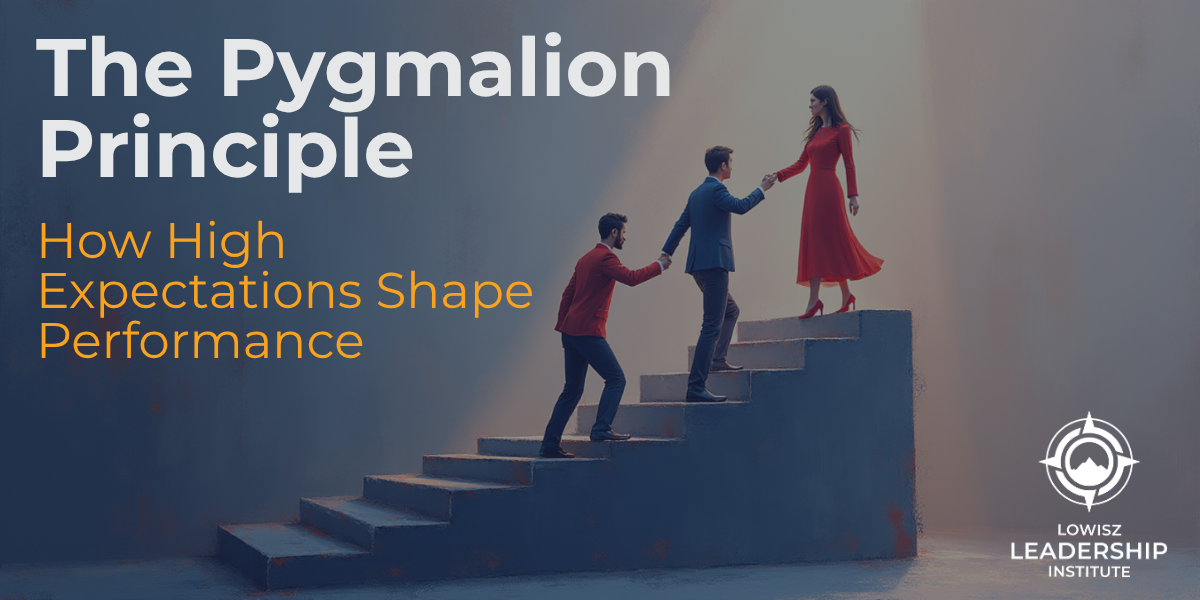
Every leader sets expectations—but few realize how powerful those expectations truly are. The Pygmalion Effect, one of psychology’s most enduring findings, shows that people tend to perform at the level of belief others hold about them. When leaders expect more—and communicate that belief clearly—teams consistently deliver stronger results. It’s not motivation by pressure. It’s leadership through belief, and it’s at the heart of the Lowisz Leadership Institute’s Guide, Don’t Drive™ philosophy.
The Research: Why Expectations Shape Reality
In 1968, psychologists Robert Rosenthal and Lenore Jacobson published a groundbreaking study that revealed a profound truth: students who were randomly labeled as 'intellectual bloomers' by their teachers performed better over time—simply because teachers believed they would. This became known as the Pygmalion Effect: our expectations subtly influence behavior, which in turn affects outcomes. In leadership, the same dynamic applies. Teams rise—or fall—to the standards their leaders project through tone, feedback, and consistency. High expectations rooted in genuine belief unlock engagement, while low or inconsistent expectations create hesitation and doubt.
Belief in Action: How Expectations Drive Effort and Learning
Belief shapes behavior long before results appear. When leaders communicate confidence, people invest more effort and creativity. A study by Gallup found that employees who strongly agree their manager believes in them are over twice as likely to be engaged. Why? Because belief signals safety and potential. It tells the team, 'You are capable, trusted, and expected to grow.' That psychological safety fuels accountability—not complacency. At LLI, we see this daily: leaders who express belief through clarity, feedback, and consistent follow-through build teams that push boundaries willingly—not because they have to, but because they want to.
Three Leadership Behaviors That Communicate Belief
Set
Standards and Make Them Visible
-
1. Set Standards and Make Them Visible
Clarity creates confidence. High-performing teams know exactly what’s expected—and why it matters. Leaders should translate expectations into visible standards: quality checklists, shared goals, and success stories. But visibility is only half the equation. Modeling those same behaviors reinforces that belief isn’t theoretical—it’s practiced.
-
2. Give Feedback That Builds Identity, Not Just Output
Constructive feedback should start with identity. Begin by affirming the leader you see in someone, then guide them to match that vision through action. Instead of saying, 'You missed the mark,' try, 'You’re capable of excellence here, and I want to see you meet that standard.' When feedback connects belief to behavior, people rise to protect that belief.
-
3. Follow Through—Every Time
Nothing destroys belief faster than inconsistency. When leaders skip commitments or change standards without reason, it signals uncertainty. Following through on promises, reviews, and support meetings reinforces trust. Each moment of consistency says, 'I believe this work—and you—are worth my time.' That reliability builds cultures where belief becomes performance.
How to Apply the Pygmalion Principle This Month
- Audit Your Expectations: Write down your expectations for each direct report. Are they equally high—or unintentionally uneven?
- Communicate Belief Weekly: End one-on-one meetings with a statement of belief: 'I trust your judgment,' or 'I know you can lead this.' These moments compound.
- Model the Standard: Pick one behavior your team needs most—like preparation or accountability—and practice it visibly. Teams take their cues from what leaders consistently demonstrate, not what they occasionally demand.
How to Raise Standards Without Breaking Your Team
Take ten minutes this week and ask yourself:
'Where might I be underestimating someone’s potential?' Belief is contagious. The moment you raise your expectations—and express them—you invite people to exceed them.
Raising the Bar Begins with Belief
The Pygmalion Principle isn’t just a theory—it’s a reminder that leadership begins in mindset, not management. People don’t rise to pressure; they rise to belief. Every expectation you hold becomes an unspoken invitation—to stretch, to grow, and to deliver. When leaders communicate belief intentionally, they don’t just raise standards—they elevate people.